
CHOICE ASSISTANT
Breast Prostheses - Sizing
Suitable for women who have undergone a mastectomy. This overview helps you discover which type and size are best suited for you. Find the right breast prostheses in four steps
1. Determine the required cup shape in the bra (1=flat, 2=average, 3=full). The cup shape describes the breast shape, specifically the fullness of the cup in the bra.
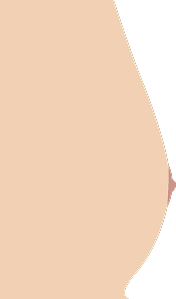
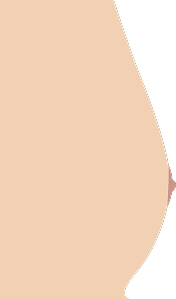
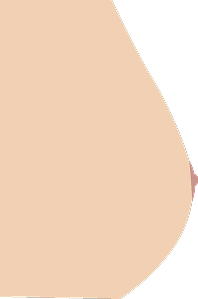
2. Determine the prosthesis shape (S = Symmetrical, A = Asymmetrical, E = Extra)

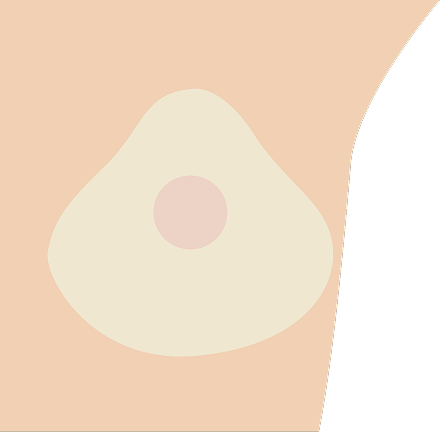

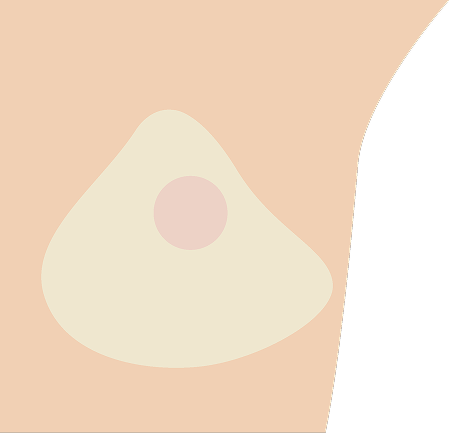

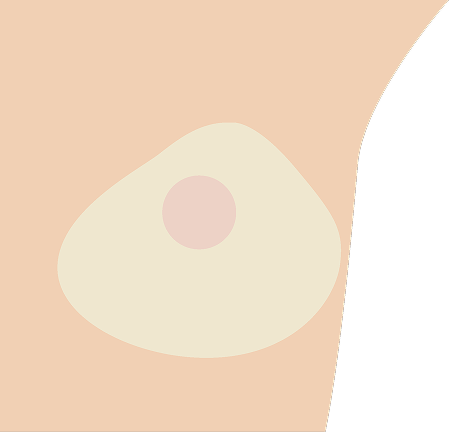
Shapers (Balance) Size Determination
Suitable for women who have undergone breast-conserving surgery. This overview helps you discover which type and size are most suitable for you.
Find the right shaper in four steps
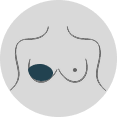
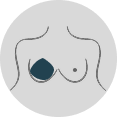
MISSING BREAST TISSUE, ESPECIALLY IN THE LOWER PART OF THE BREAST
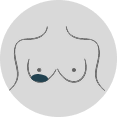
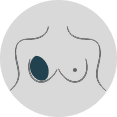
MISSING OR UNEVEN BREAST TISSUE IN VARIOUS PLACES
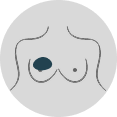
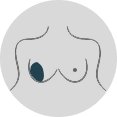
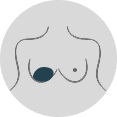
4. Determine the size and thickness of the shaper respectively
HOW MUCH VOLUME IS NEEDED TO BALANCE THE BREASTS? DETERMINE THE THICKNESS (THIN, MEDIUM, OR VOLUME) USING THE FITTING METHOD (CCD METHOD) (ONLY FOR THE OVAL AND DELTA SHAPES)
FITTING METHOD (CCD METHOD)
The cup is measured in centimeters from the center front of the bra (sternum) to the side seam of the bra.
1. Measure the cup over the highest point of the non-operated side (size 1)
2. Measure the cup over the highest point of the operated side (size 2)
3. Subtract size 2 (operated side) from size 1 (non-operated side)
4. The result is the cup difference (cup difference, CD) and this gives you an indication of the required thickness of the prosthesis (thin, medium, volume)
CHOOSE THE RIGHT SIZE (S, M, L, XL) OF THE ELIPS (SE) OR SPECIAL VARIA (SV), DEPENDING ON THE FABRIC SHORTAGE.
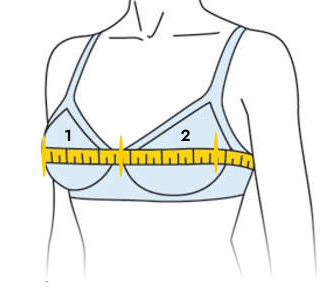
Size 1 - Size 2 = cup difference
Less than 1 cm
THIN
thin prosthesis
TO, TD
1-2 cm
MEDIUM
average prosthesis
MO
2 cm or more
VOLUME
full denture VD
VD
Suitable for women who have undergone breast-conserving surgery. This overview helps you discover which type and size are most suitable for you.
Find the right shaper in four steps
4. Determine the size and thickness of the shaper respectively
HOW MUCH VOLUME IS NEEDED TO BALANCE THE BREASTS? DETERMINE THE THICKNESS (THIN, MEDIUM, OR VOLUME) USING THE FITTING METHOD (CCD METHOD) (ONLY FOR THE OVAL AND DELTA SHAPES)
FITTING METHOD (CCD METHOD)
The cup is measured in centimeters from the center front of the bra (sternum) to the side seam of the bra.
1. Measure the cup over the highest point of the non-operated side (size 1)
2. Measure the cup over the highest point of the operated side (size 2)
3. Subtract size 2 (operated side) from size 1 (non-operated side)
4. The result is the cup difference (cup difference, CD) and this gives you an indication of the required thickness of the prosthesis (thin, medium, volume)
MISSING BREAST TISSUE, ESPECIALLY IN THE LOWER PART OF THE BREAST
MISSING OR UNEVEN BREAST TISSUE IN VARIOUS PLACES
CHOOSE THE RIGHT SIZE (S, M, L, XL) OF THE ELIPS (SE) OR SPECIAL VARIA (SV), DEPENDING ON THE FABRIC SHORTAGE.
Size 1 - Size 2 = cup difference
Less than 1 cm
THIN
thin prosthesis
TO, TD
1-2 cm
MEDIUM
average prosthesis
MO
2 cm or more
VOLUME
full denture VD
VD
Based on this overview, you will discover what best suits your situation.
individually customizable
sticks directly to the skin
the softest and most natural
base prosthesis and shaper
Do you have an uneven chest wall or uneven scar tissue?
Do you experience weight fluctuations and/or lymphedema?
Do you have painful or sensitive scars?
Adapt Air
Contact
Do you have back pain or neck pain?
Would you like a prosthesis that can be directly adhered to the skin?
Adapt Air
Natura
Do you sweat often or exercise a lot?
Do you have an uneven chest wall or uneven scar tissue?
Do you want a shaper that can stick to your skin?